Bands
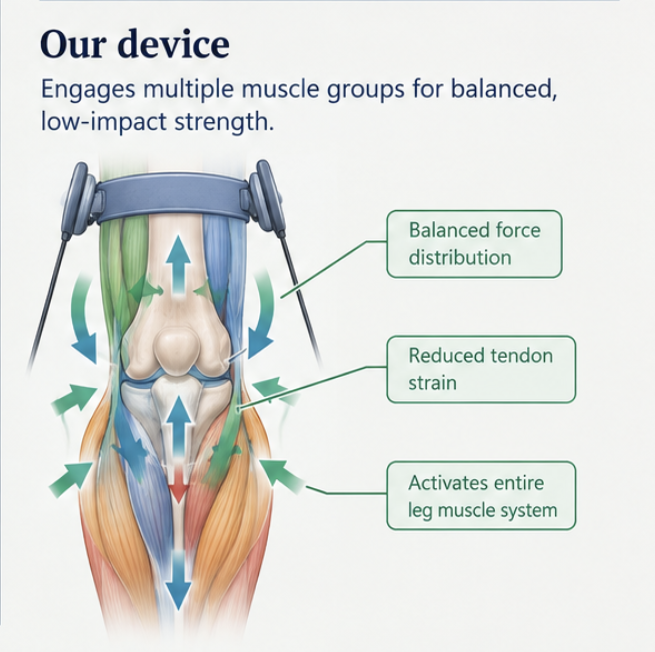
Why the knee prefers elastic training over traditional weights
Aging is accompanied by substantial declines in muscle strength and functional capacity, making progressive but controllable resistance increasingly important.
A 2026 randomized trial of 48 adults averaging 67 years of age directly compared elastic bands with free weights over 12 weeks. Both groups improved functional performance, with the elastic-band group improving the 30-second chair-stand test by 19.8% and the box-lift test by 44.8%.
Bands are lighter, safer, less stressful on the knee, and just as, if not more, effective.
BioMechanics
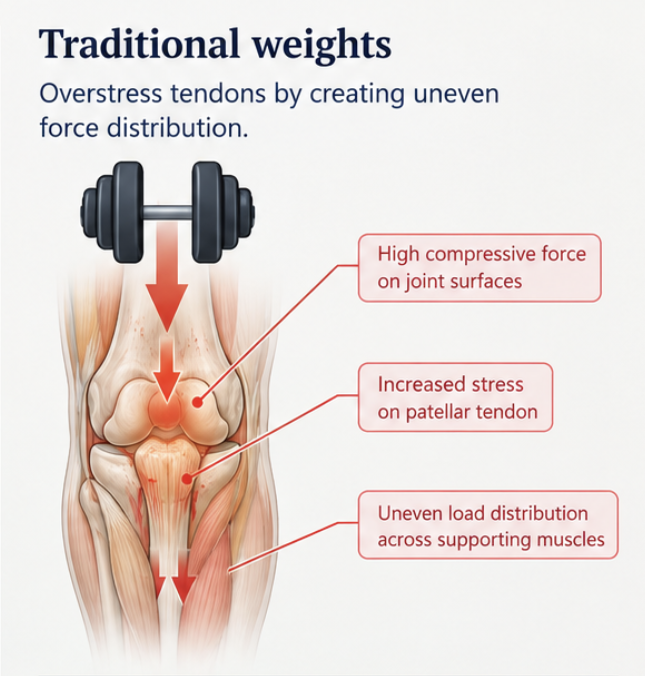
A device that rebuilds strength with muscle coordination
Quadriceps: knee extension
Hamstrings: opposing/stabilizing action
Calves: ankle stabilization
Hip muscles: maintaining posture and controlling movement
These coordinated movements engage the entire leg as one functional system
How Our Product Operates
Elastic Resistance to Low-impact Movement.
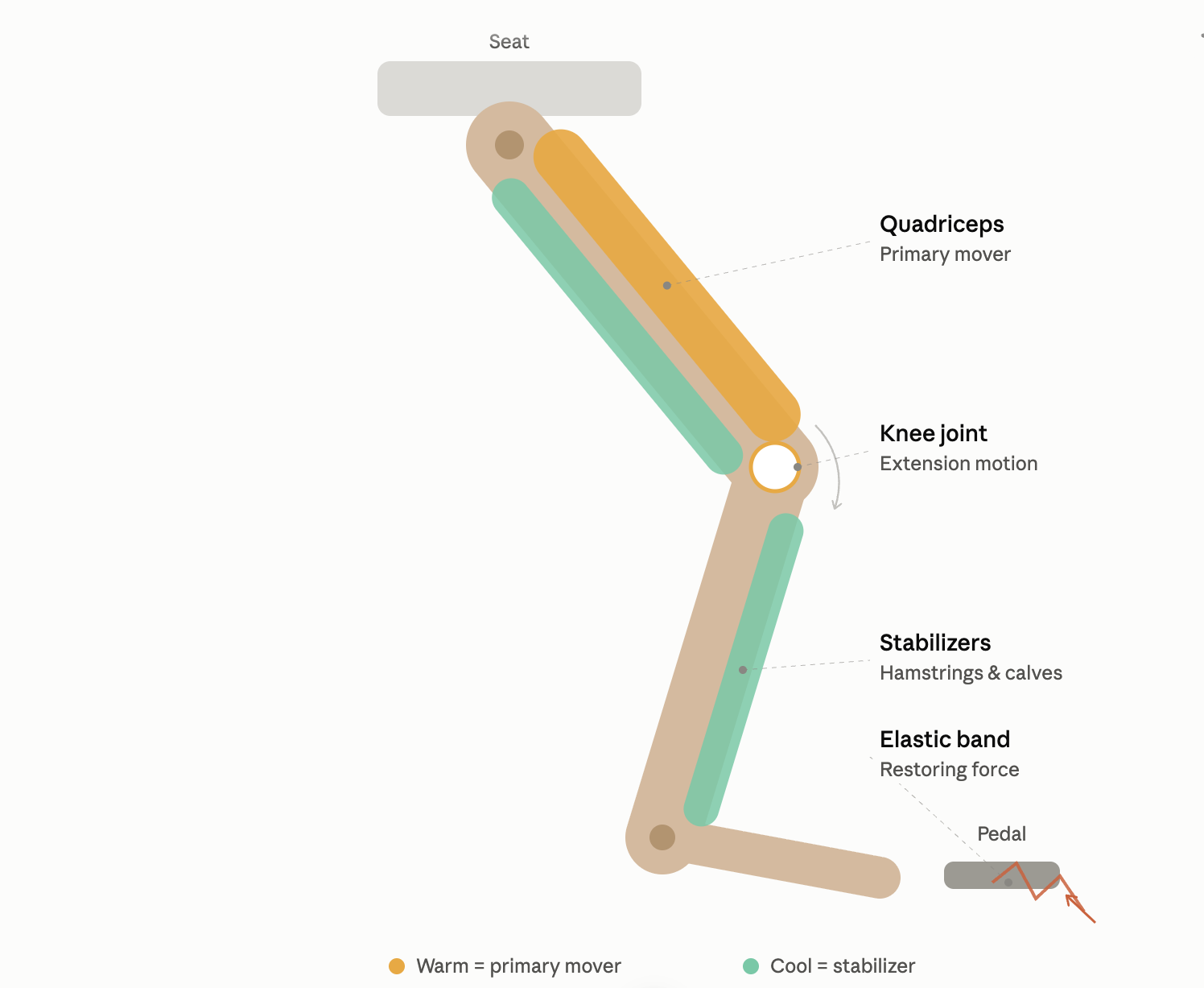
Silverstride transforms seated pedaling into progressive lower-body resistance. As each pedal moves forward, elastic bands stretch to create resistance; as it returns, tension resets for the next repetition.
The motion primarily engages the quadriceps during knee extension, with the hamstrings and calves supporting controlled movement and stability. Incorporating principles of resistance training and controlled range of motion, Silverstride targets muscles essential to functional activities (eg. sit-to-stand chair, stairs ascent and descent, and gait stability)